


The working principle of centrifugal fan and cross-flow fans
Mar 28, 2022
Works differently
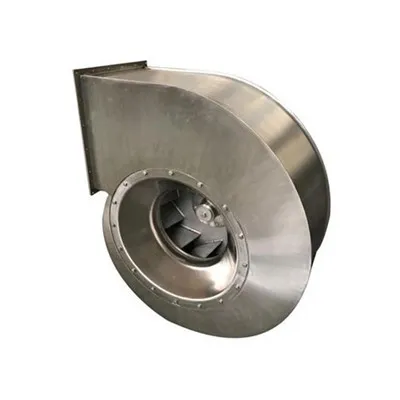
Centrifugal fan: According to the principle of converting kinetic energy into potential energy, the centrifugal fan uses a high-speed rotating impeller to accelerate the gas, then decelerates and changes the flow direction, so that the kinetic energy is converted into potential energy (pressure). In a single-stage centrifugal fan, the gas enters the impeller from the axial direction, the gas changes to the radial direction as it flows through the impeller, and then enters the diffuser. In the diffuser, the gas changes the direction of flow and the increase in the cross-sectional area of the duct slows down the gas flow, which converts kinetic energy into pressure energy. The pressure increase occurs mainly in the impeller, and secondly in the diffusion process. In a multi-stage centrifugal fan, a recirculator is used to move the airflow to the next impeller, creating a higher pressure.
Cross-flow fan: When the impeller rotates, the airflow enters the cascade from the opening of the impeller, passes through the interior of the impeller, and is discharged into the volute from the other side of the cascade to form a working airflow. The flow of the airflow in the impeller is very complicated, the airflow velocity field is unstable, and there is a vortex in the impeller, the center is located near the volute tongue. The existence of the vortex causes a circulating flow at the output end of the impeller. Outside the vortex, the airflow streamline in the impeller is arc-shaped. Therefore, the flow velocity at each point on the outer circumference of the impeller is inconsistent. The closer to the vortex center, the greater the velocity, and the closer to the volute, the smaller the velocity.
https://www.jnblower.com/
S-ar putea sa-ti placa si
-

Axiale cu rotor axial
-

Ventilatoare mici ventilator centrifugal din China produc...
-

Aparatul centrifugal pentru ventilație cu ventilator pent...
-

110kw ventilator centrifugal cu ventilator de înaltă pres...
-
Ventilatoare centrifugale Sisteme de tratare a apei rezid...
-

Identificator de ventilator centrifugal cu temperatură în...